Introduction
Everyone knows anxiety. It’s the flutter in your stomach before a big meeting. The restlessness before a tough conversation. But when does that feeling become something more? Not all anxiety shouts. This anxiety takes a mellow form which remains steady without becoming overwhelming for management. That’s moderate anxiety. The condition exists but fails to create paralysis. The existence of moderate anxiety makes us wonder if this amount represents a threat hiding within our nature or whether it naturally happens to human beings.
The following discussion evaluates the characteristics of moderate anxiety through definitions along with explanations of physical and mental impacts and investigation of when it becomes problematic and available management strategies.
What Is Moderate Anxiety?
Defining the Gray Zone
Anxiety levels located in the middle range make up the moderate portion. The condition exists between regular stress levels and extreme anxiety disorders without reaching panic disorder criteria. Your current state falls somewhere between life’s challenging moments but not at the level of personal disintegration.
You might overthink small things. Sleep might be hit or miss. Your brain circles back to the task repeatedly when this causes extended times needed to complete tasks instead of difficulty levels. Such anxiety stays in your mind even while being recognizable and at times vexing.
Common Symptoms of Moderate Anxiety:
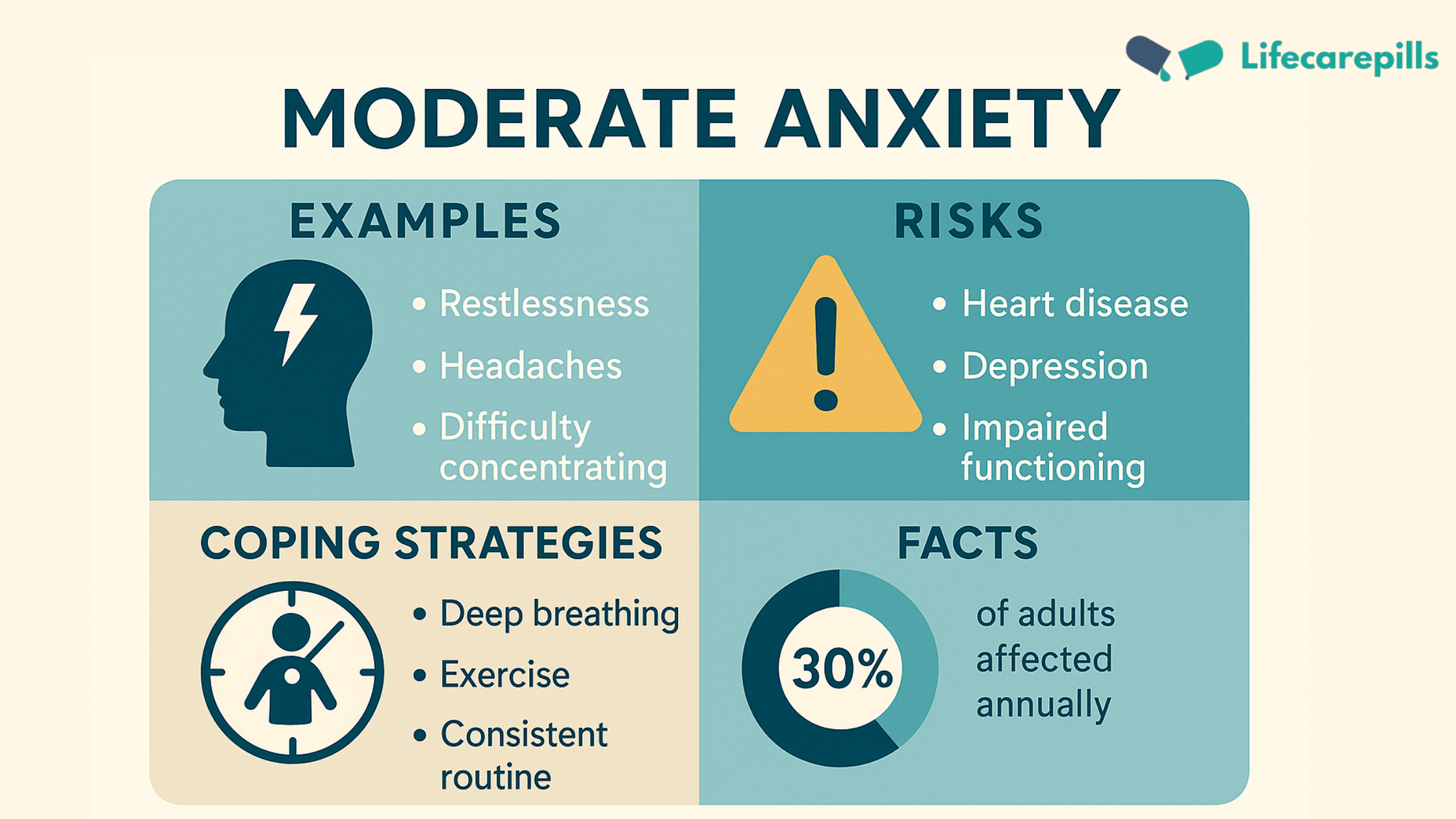
- Feeling restless or “on edge”
- Overpreparing for minor tasks
- Avoiding calls or meetings
- Trouble falling or staying asleep
- Muscle tension or occasional headaches
- Difficulty focusing or making decisions
Most individuals underestimate their symptoms as simply symptoms of stress. Although these symptoms do not necessarily reduce life quality they create long-lasting effects.
Who Experiences It?
Moderate anxiety is incredibly common. Students, professionals, parents, caregivers—just about anyone under regular stress can develop it. High-pressure environments, poor sleep, lack of support, or even too much caffeine can push you into this zone.
The Hidden Benefits of Moderate Anxiety
A Mental Boost—When It Works in Your Favor
A moderate amount of anxiety does not always indicate negative outcomes. The controlled intake of this substance enhances your alertness without causing substantial harm. Nature provides this substance to improve performance levels.
- You become more organized.
- You prepare thoroughly.
- You anticipate problems and plan ahead.
Athletes, performers, and students often credit a little anxiety for their peak performance. Tension maintains your concentration level but it becomes problematic when it exceeds tolerance.
Building Resilience and Emotional Intelligence
People who experience moderate levels of anxiety tend to develop personal growth as a result. The stressful condition forces you to learn how to reevaluate yourself and create better behavioral patterns. When you experience moderate anxiety you rise in awareness regarding your emotions and boundaries as well as your personal restrictions. People who handle anxiety at moderate levels tend to develop better methods for dealing with stressful situations as they gain emotional strength throughout the years.
When Does Moderate Anxiety Become Harmful?
The Slippery Slope
The difficulty remains with moderate anxiety because it can transform into severe anxiety. The escalating process of anxiety tends to occur gradually during periods of life pressure and diminished self-care routines. What starts as overthinking can evolve into avoidance. A few missed nights of sleep can spiral into chronic exhaustion.
Red flags include:
- Growing irritability or mood swings
- Avoiding everyday tasks or social plans
- Feeling overwhelmed more days than not
- Trouble relaxing, even in peaceful situations
The point at which anxiety starts determining your choice making routines and relationships marks the end of being able to manage it effectively. It’s interfering.
Physical and Emotional Effects
Long-term moderate anxiety takes a toll. It might raise blood pressure, affect digestion, or wear down your immune system. Emotionally, it can dim your motivation and joy. You’re surviving, but not thriving.
Related: https://lifecarepills.com/is-anxiety-a-disability-for-work/
How to Manage Moderate Anxiety
Everyday Strategies for Balance
You don’t have to wait for things to get worse. Here are practical ways to take back control:
- Grounding techniques like the 5-4-3-2-1 method, which prompts people to observe (five things you see, four you feel, etc.)
- Breathwork — Inhale deeply, exhale slowly. Repeat 5–10 times.
- Journaling — Get those worries out of your head and onto paper.
- Movement — Even a short walk can reduce anxiety levels.
- Create a routine — Regular meals, consistent sleep, and screen limits help a lot.
These small, repeatable habits build a sense of calm and stability over time.
Long-Term Mental Wellness Tools
- Therapy — Cognitive Behavioral Therapy (CBT) is especially effective.
- Mindfulness and meditation — These build awareness and reduce rumination.
- Medication (if needed) — Some people benefit from anti-anxiety prescriptions—always talk to a licensed professional.
The point isn’t to eliminate anxiety. It’s to manage it well enough so it doesn’t control you.
When to Seek Professional Help
There’s no gold star for struggling silently. If moderate anxiety is making daily life harder—or if it’s getting worse—it’s time to reach out.
You deserve support. Therapy isn’t just for “serious” cases. It’s for anyone ready to feel better, set boundaries, and learn healthier thought patterns.
Conclusion: Embrace Awareness, Not Fear
People should understand moderate anxiety instead of fearing its existence. Anxiety behaves differently toward you according to your reactions to its existence. It may drive you forward or drag you down.
Hear the first indications that will grow into forthcoming escalating distress. Form practices which sustain mental wellness. Seek help immediately whenever the burden becomes too hard to bear alone.
Because sometimes, the middle ground is where transformation begins.
Real-Time Study Data on Moderate Anxiety
1. Prevalence and Demographics:
- According to the Anxiety disorders afflict about 18.1% of U.S. adults yearly as per data from the Anxiety & Depression Association of America (ADAA). The majority of anxiety cases belong to the moderate level.
- A 2022 study published in The Lancet Psychiatry found that one in three adults under 40 reported symptoms of moderate anxiety post-COVID-19.
2. Work Impact Study:
- A Harvard Business Review survey (2021) showed that 67% of employees with moderate anxiety reported decreased productivity, and 53% said it impacted their ability to focus during meetings.
3. Student Anxiety Report:
- A 2023 National College Health Assessment found that 36% of college students reported feeling moderate anxiety that interfered with academic performance.
4. Health Risk Stats:
- A meta-analysis from JAMA Psychiatry (2020) found that moderate anxiety was linked to a 22% increased risk of developing cardiovascular issues over a 10-year period
Risk Factors for Developing Moderate Anxiety
- Genetics: A family history of anxiety disorders increases your risk.
- Chronic stress: Long-term work or relationship stress is a leading contributor.
- Personality traits: Perfectionists and people-pleasers often experience moderate anxiety.
- Lack of sleep: Medical research demonstrates that inconsistent sleeping habits trigger more severe anxiety condition symptoms.
- Substance use: The use of caffeine along with alcohol and recreational drugs tends to increase anxiety severity.
Risk Assessment: When Moderate Anxiety Becomes a Concern
Here’s a quick checklist for self-assessment:
| Symptom | Frequency | Impact on Daily Life |
| Difficulty sleeping | Often | Fatigue, irritability |
| Constant overthinking | Daily | Trouble concentrating |
| Avoiding social events | Occasionally | Feeling isolated |
| Tension/headaches | Weekly | Productivity dips |
| Feeling “on edge” | Frequently | Impacts relationships |
You should consult a professional healthcare provider when you experience at least three symptoms regularly since they start to limit your daily functioning.
Frequently Asked Questions (FAQs)
Q1: Is moderate anxiety considered a mental illness?
A: Not always. It’s frequently a normal reaction to the difficulties of life. However, it may indicate a generalized anxiety disorder if it interferes with your everyday functioning and general well-being.
Q2: Can moderate anxiety go away on its own?
A: Sometimes, particularly if it’s brought on by a particular incident. However, ongoing anxiety frequently necessitates lifestyle modifications or some kind of intervention.
Q3: Do I need medication for moderate anxiety?
A: Not necessarily. Therapy, mindfulness, exercise, and routine adjustments are ways that many people deal with it. Usually, medication is saved for cases that are more severe or persistent.
Q4: Can moderate anxiety be beneficial?
A: Yes! It can boost focus, motivation, and preparation. Maintaining equilibrium is crucial to preventing it from tipping into dangerous territory.
Q5: How can I tell the difference between stress and anxiety?
A: Usually, stress has a specific cause and reduces when that cause is eliminated. Anxiety can have an unclear base and tend to persist.