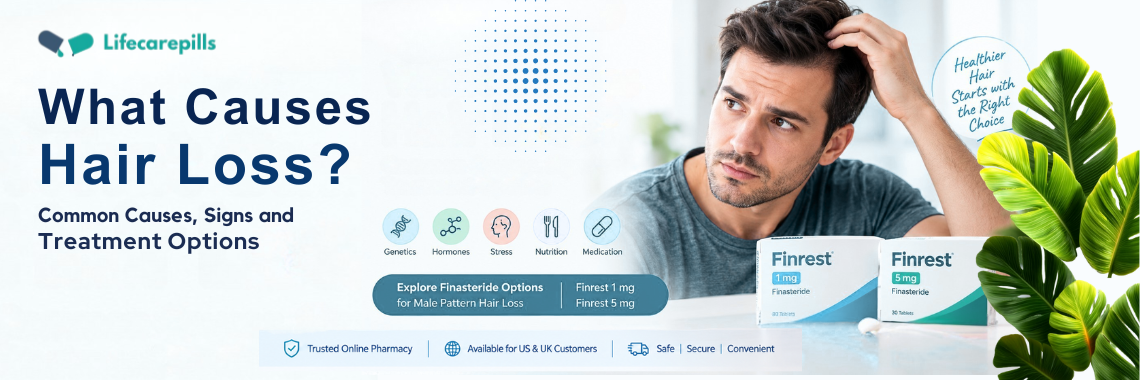
Hair loss can occur gradually. A section that is getting wider, a crown that is thinning or a hairline that is receding may at first seem barely noticeable, but they become much more apparent over time. Finasteride 1 mg is now one of the most widely studied oral treatments for male pattern hair loss.
Finasteride is one of a group of medicines known as 5-alpha-reductase inhibitors. It works by decreasing the conversion of testosterone to dihydrotestosterone (DHT), a hormone that plays a role in the miniaturisation of susceptible hair follicles. Finasteride 1 mg is indicated in the U.S. for the treatment of male pattern hair loss in men.
But how good? How fast does it work? What are the side effects to be aware of? What if treatment stops?
In this guide we’ll discuss how finasteride 1 mg works, potential benefits, what to expect, precautions and important considerations.
What Is Finasteride 1 mg?
Finasteride 1 mg is a prescription oral medication for the treatment of male pattern hair loss (androgenetic alopecia).
The 1 mg strength is only related to the treatment of hair loss. It is generally taken as 1 tablet daily with or without food as per prescribing information.
Finasteride is more than just a nutritional supplement for better hair. It works through hormones. It works by blocking an enzyme called 5-alpha-reductase and therefore lowers the production of DHT.
Male pattern hair loss is a progressive condition, so the goal is not just to stimulate new growth. Another important goal is to slow down the ongoing miniaturisation of the hair follicles, which leads to finer and shorter hairs.
The American Academy of Dermatology says finasteride can slow further hair loss and stimulate some new hair growth in men with male pattern hair loss.
What Causes Male Pattern Hair Loss?
The most common cause of hair loss in men is male pattern hair loss. It is also known as androgenetic alopecia.
One major factor is genetic susceptibility. But hormones are also part of the process.
DHT is produced when the enzyme 5-alpha-reductase converts testosterone. DHT is involved in progressive follicular miniaturisation of genetically susceptible scalp follicles. Each hair gets progressively finer, shorter and less visible.
The pattern is often recognisable. Hair may begin to thin around the crown or top of the scalp and the frontal hairline may slowly recede.
Note that not all hair loss is due to androgenetic alopecia. Sudden shedding, patchy bald spots, scalp inflammation or hair loss related to illness or nutritional deficiencies may have very different causes. So it is important to correctly identify the cause before starting treatment.
How Does Finasteride 1 mg Work?
The mechanism of finasteride is relatively simple, but its effects on hair biology are slow.
Finasteride works by blocking the type II 5-alpha-reductase enzyme that converts testosterone to DHT. Finasteride blocks this pathway and thus reduces the hormonal stimulus to susceptible hair follicles by lowering the levels of DHT.
Think of it as slowing down one of the biological processes that lead to follicular miniaturisation.
Lower DHT activity may help susceptible follicles to continue their growth cycle. Existing hairs can be thicker for longer and some miniaturised follicles can produce more visible hairs.
Finasteride, however, won’t instantly repair the damage to the follicles. Patience and consistency are key because hair has a biological growth cycle of its own.
Benefits of Finasteride 1 mg for Hair Loss
1. Helps Slow Hair Loss
One of the principal benefits of finasteride is its ability to slow the progression of male pattern hair loss.
According to the American Academy of Dermatology, studies have shown that finasteride slows further hair loss in approximately 80% to 90% of men taking it, with some men also experiencing hair regrowth.
That distinction matters.
For someone experiencing progressive thinning, preserving existing hair can be just as valuable as growing new hair.
2. May Promote Hair Regrowth
Finasteride is not solely a hair-loss prevention treatment.
Clinical research has demonstrated increased scalp hair counts in men with androgenetic alopecia receiving finasteride 1 mg compared with placebo.
Regrowth is generally more noticeable where follicles are still viable but have become miniaturized. Completely smooth, longstanding areas of baldness may be less responsive.
3. Can Improve Hair Density
By slowing follicular miniaturization and allowing susceptible follicles to produce stronger hairs, finasteride can improve the overall appearance of scalp coverage.
Clinical studies have reported improvements in hair count and hair weight over extended treatment periods.
The result is not necessarily a dramatic overnight transformation. Rather, the improvement can be incremental: less visible scalp, thicker-looking hair and slower progression.
4. May Provide Long-Term Benefits
Hair-loss treatment often requires a long-term perspective.
Research involving several years of finasteride treatment has demonstrated sustained improvements in hair count and hair weight compared with placebo.
This is one reason finasteride is generally considered a maintenance treatment rather than a short course.
Finasteride 1 mg Results: What to Expect Over Time
One of the most common questions is: How long does finasteride take to work?
The answer varies between individuals.
First 1–3 Months
Do not expect dramatic regrowth immediately.
The prescribing information states that daily use for approximately three months or longer may be necessary before benefits become apparent.
Some people may notice changes earlier, but the absence of visible improvement during the initial weeks does not necessarily mean treatment will not work.
Around 4–6 Months
This is when some users may begin noticing reduced shedding or early improvements in density.
The American Academy of Dermatology states that men who respond to finasteride may begin seeing results at around six months.
Photographs taken under consistent lighting can be useful for comparing gradual changes that may otherwise be difficult to notice in a mirror.
Around 6–12 Months
By this stage, treatment response can become easier to evaluate.
Some men may experience improved density, while others may primarily notice that hair loss has slowed or stabilized.
Clinical studies have demonstrated measurable improvements in scalp hair with finasteride compared with placebo.
Long-Term Treatment
Hair-loss treatment is different from many short-term medicines.
If finasteride is effective, continuing treatment is generally necessary to maintain the benefit. The FDA labeling states that discontinuation results in reversal of the treatment effect within approximately 12 months.
Therefore, stopping treatment does not typically mean that the hair gained or preserved will remain permanently.
Finasteride 1 mg Side Effects
Finasteride is a prescription medication and, like any medicine, can cause adverse effects.
The most commonly reported adverse reactions associated with finasteride 1 mg include:
- Decreased libido
- Erectile dysfunction
- Ejaculation disorders
These effects were reported in clinical trials and occurred in a minority of patients.
Other reported concerns include breast tenderness or enlargement and mood-related symptoms such as depression. The American Academy of Dermatology specifically advises discussing potential side effects with a dermatologist before treatment.
Some sexual adverse effects have also been reported to persist after discontinuation in certain patients. This is an important consideration when discussing treatment with a healthcare professional.
Does Finasteride Affect Fertility?
Finasteride can affect reproductive parameters in some individuals, so men who are concerned about fertility should discuss this with their healthcare provider before starting treatment.
Individual circumstances matter. A doctor may consider medical history, current medicines, reproductive plans and other factors before recommending therapy.
Who Should Avoid Finasteride 1 mg?
Finasteride 1 mg is indicated for men with male pattern hair loss and is not indicated for women or children according to U.S. prescribing information.
Pregnant women or women who may become pregnant should not handle crushed or broken finasteride tablets because exposure may pose a risk to a developing male fetus.
People with unexplained hair loss should also avoid self-diagnosing the condition. Hair shedding can arise from numerous causes, and treating the wrong condition can delay appropriate care.
A healthcare professional can help determine whether the pattern is consistent with androgenetic alopecia.
Finasteride vs Minoxidil for Hair Loss
Finasteride and minoxidil work through different mechanisms.
Finasteride primarily targets the hormonal pathway involving DHT. It is an oral prescription medication for male pattern hair loss.
Minoxidil, meanwhile, is a different type of hair-growth treatment and can be used topically. The American Academy of Dermatology notes that men may use minoxidil alone or, under medical guidance, alongside finasteride.
There is no universal answer to which is “better.”
The appropriate option depends on the type and extent of hair loss, medical history, treatment goals, tolerability and professional assessment.
Can Finasteride Be Used With Minoxidil?
Yes, healthcare professionals may recommend combining finasteride with minoxidil for certain men with male pattern hair loss.
The rationale is that the two treatments approach hair loss through different mechanisms.
However, combining medicines does not automatically mean better results for everyone. It can also increase the complexity of a treatment routine.
A dermatologist can determine whether combination treatment is appropriate based on the individual’s pattern of hair loss and medical circumstances. The AAD recognizes that finasteride may be used alone or together with minoxidil.
What Happens If You Stop Taking Finasteride?
Finasteride is generally considered a long-term treatment.
If it is working, discontinuing it allows DHT activity to return toward its previous state, and the benefits can gradually disappear. FDA prescribing information states that withdrawal of treatment leads to reversal of the effect within 12 months.
In practical terms, this means finasteride does not permanently cure genetic male pattern hair loss.
Its role is to help control the underlying process while treatment continues.
Frequently Asked Questions
Is finasteride 1 mg effective for hair loss?
Finasteride 1 mg has substantial clinical evidence supporting its use for male pattern hair loss. Studies have demonstrated reduced hair loss and increased hair growth compared with placebo.
How long does finasteride 1 mg take to work?
Some people may notice improvement after several months. Official prescribing information indicates that at least three months of daily treatment may be needed before benefits become apparent, while dermatology guidance commonly discusses evaluating results around six months.
Can finasteride regrow a receding hairline?
Finasteride may help some men with frontal and other areas of male pattern hair loss, but the degree of response varies. Clinical evidence is stronger for certain scalp regions, and FDA labeling notes that efficacy for bitemporal recession has not been established.
Does finasteride permanently cure baldness?
No. Finasteride can help control male pattern hair loss while it is being taken, but stopping treatment generally results in loss of its benefits over time.
Can women take finasteride 1 mg?
Finasteride 1 mg is not indicated for women under the U.S. labeling discussed here. Pregnant women or women who may become pregnant should not handle crushed or broken tablets because of potential fetal risk.
Is finasteride better than minoxidil?
Neither is universally better for every person. They work differently and may sometimes be used together under professional supervision.
Does finasteride cause sexual side effects?
Sexual adverse effects such as decreased libido, erectile dysfunction and ejaculation disorders have been reported in clinical trials. Anyone experiencing concerning symptoms should discuss them with a healthcare professional.
Final Thoughts
Finasteride 1 mg is one of the most studied prescription treatments for male pattern hair loss. It acts mainly through inhibition of 5-alpha-reductase and reduction of DHT, which helps to decrease the miniaturization of the follicle associated with androgenetic alopecia.
It may help slow hair loss, preserve existing hair and even encourage some regrowth. But expectancies must be realistic. Hair biology is slow—months, not weeks—to see any real change.
The other important point is that finasteride is not for everyone. Potential sexual and other adverse effects should be discussed with a qualified health care professional prior to treatment. The decision should weigh up the potential benefits against the individual risk factors, as this is a medicine intended for long term use when it works.
Early professional assessment can be especially valuable for men with progressive thinning. The earlier the underlying cause is found, the earlier an appropriate treatment strategy can be considered.