

Description
What Is Clomisign 100 mg?
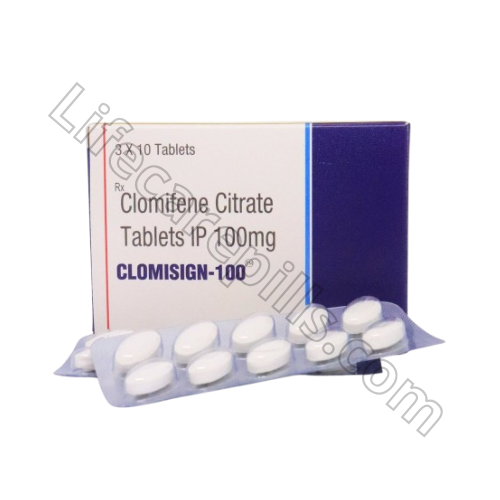
Clomisign 100 mg contains clomiphene citrate 100 mg and belongs to a class of medicines known as selective estrogen receptor modulators (SERMs). It is primarily prescribed to women who have difficulty ovulating, particularly when infertility is associated with irregular or absent ovulation.
Clomiphene influences estrogen receptors in the hypothalamus. This action can encourage the body to release reproductive hormones that stimulate the ovaries and support the ovulation process.
What Is Clomisign 100 mg Used For?
Clomisign 100 mg may be prescribed for:
- Ovulation difficulties associated with infertility
- Irregular or absent ovulation in women trying to conceive
- Selected cases of infertility linked to ovulatory or hormonal problems
Treatment should begin only after a healthcare professional has assessed the underlying cause of infertility and determined that clomiphene is appropriate.
How Does Clomisign 100 mg Work?
Clomisign 100 mg works by blocking estrogen receptors in the hypothalamus. This can lead the body to perceive reduced estrogen activity, encouraging the release of follicle-stimulating hormone (FSH) and luteinizing hormone (LH).
These hormones act on the ovaries, helping ovarian follicles mature and potentially triggering the release of an egg during ovulation.
Strengths and Substitutes
Side Effects
Clomisign 100 mg may cause side effects in some individuals. Possible reactions include:
- Hot flashes
- Headache
- Nausea
- Breast tenderness or discomfort
- Mood changes
- Bloating or abdominal discomfort
- Visual disturbances
Contact a healthcare professional promptly if you develop severe abdominal or pelvic pain, substantial abdominal swelling, shortness of breath, or sudden changes in vision.
Safety Advice
Alcohol: No specific, well-established interaction between alcohol and clomiphene is known. However, limiting or avoiding alcohol during fertility treatment may be advisable because alcohol can also influence fertility and reproductive health.
Driving: Clomisign 100 mg may occasionally cause dizziness, headache, or visual disturbances. Avoid driving or operating machinery if you feel dizzy or notice changes in vision. Persistent or unusual visual symptoms should be evaluated promptly.
Liver: Inform your doctor if you have liver disease or a history of liver problems. Because clomiphene is metabolized by the liver, it is generally unsuitable for individuals with significant liver dysfunction unless specifically recommended by a healthcare professional.
Kidney: Tell your doctor if you have kidney disease. Clomiphene is not primarily eliminated through the kidneys, but your overall health should still be considered before treatment begins.
Pregnancy: Do not use Clomisign 100 mg during pregnancy. The medicine is intended to stimulate ovulation before conception, so pregnancy should be ruled out before starting an appropriate treatment cycle.
Breastfeeding: Clomisign 100 mg is generally not recommended while breastfeeding because clomiphene may reduce milk production, while its effects on a breastfed infant have not been adequately established. Consult your doctor before use.
Dosage
The appropriate dose and treatment duration for Clomisign 100 mg depend on the individual’s condition, previous treatment response, and ovulatory status. A 100 mg daily dose may be prescribed in selected situations, such as when a lower dose has not produced the desired ovulatory response. The exact regimen must be determined by a qualified healthcare professional.
Do not increase the dose, prolong treatment, or repeat another treatment cycle without medical advice. Ovulation may require monitoring to assess the response and reduce potential complications.
How to Take Clomisign 100 mg
Take Clomisign 100 mg exactly according to your doctor’s instructions.
- Swallow the tablet with water.
- It can generally be taken with or without food.
- Take it at the prescribed time during the recommended treatment period.
- Never exceed the dose recommended by your healthcare professional.
- If you miss a dose, contact your doctor for instructions rather than taking an additional tablet.
Because clomiphene can increase the possibility of multiple pregnancy and may contribute to ovarian enlargement or other complications, treatment should be undertaken with appropriate medical supervision.


